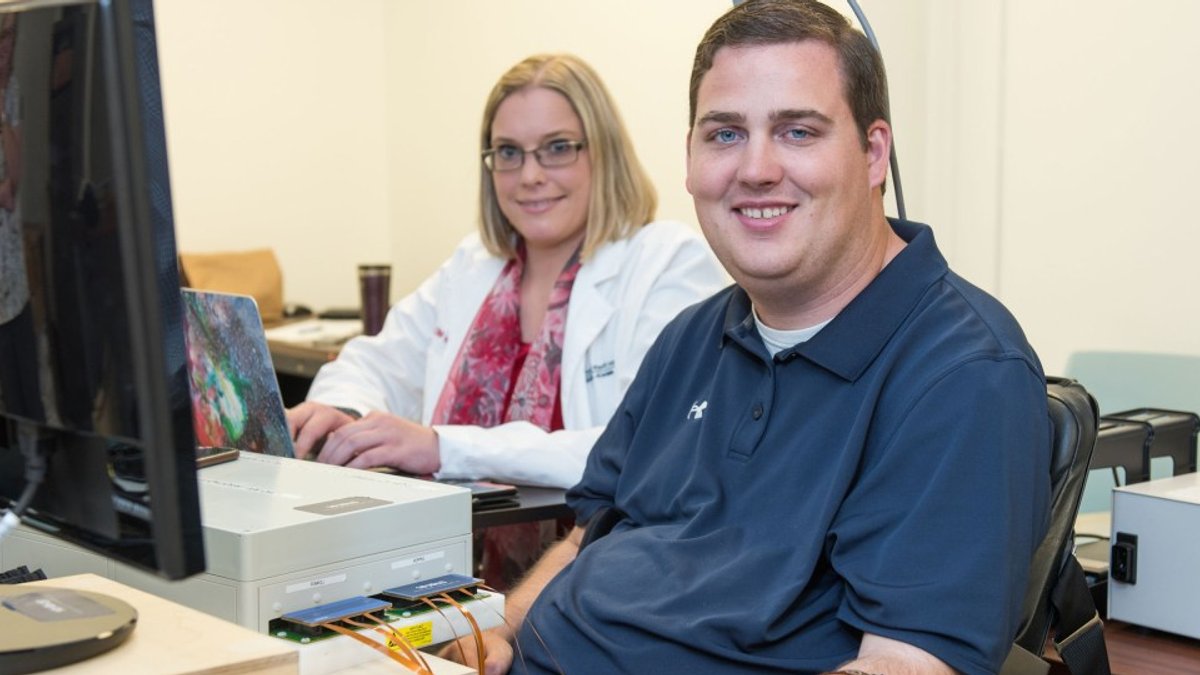
Volunteers who participate in brain implant trials are seeking more autonomy and fewer non-disclosure agreements (NDAs) in their collaborations with researchers. Ian Burkhart, who had a brain implant inserted in 2014, is working on a set of guidelines for researchers developing brain-computer interfaces (BCIs). He believes that trial participants should be recognized for their contributions, given their significant investment of time and intellectual effort.
Jennifer Chandler, a professor of law and neuroethics at the University of Ottawa, agrees that BCI trials are unique and require special consideration. “These are people who have a device embedded in their brain, are in trials sometimes for years and years … [and contribute] a significant investment of time, of the body, and of intellectual effort,” she says.
Developing Guidelines for BCI Trials
Burkhart was left paralyzed from the chest down after a diving accident in 2010, when he was 19 years old. He volunteered for a brain implant trial in 2014, which allowed him to control a robotic arm using his thoughts. The trial was a scientific breakthrough, and Burkhart was able to use the system to perform various tasks, including playing Guitar Hero.
Read Also: COP31 climate talks begin in Turkey
Over the course of two years, Burkhart participated in two clinical trials, during which he spent numerous hours in the lab, providing feedback and contributing to the research team. He believes that trial participants should be compensated for their time and recognized as key members of the research team, potentially even being listed as coauthors on scientific publications.
The guidelines developed by Burkhart and his colleagues address several key issues, including privacy and the handling of brain data. The guidelines state that brain data “should be understood as the participant’s personal information” and that participants should have access to their own data whenever they want.
The guidelines also emphasize the importance of preparing participants for potential media attention and the need for researchers to commit to maintaining brain devices for a “reasonable period” after a trial ends. This includes providing support for trial participants who need to have their devices removed, as Burkhart did in 2021 due to an infection.
The case of Rita Leggett, an Australian woman who had a brain implant removed against her will after the company that made it went bust, highlights the need for clear guidelines and protocols for the removal of brain devices. The guidelines developed by Burkhart and his colleagues aim to prevent such situations and ensure that trial participants are treated with respect and autonomy.
Read Also: UN climate talks underway in Turkey
Burkhart also plans to discuss the guidelines with researchers at an upcoming neuroscience conference. “This is a living document, and this is version one,” says Chandler. “It’s just the starting point.”
One of the key challenges in developing the guidelines was balancing the need for participant autonomy with the need for researchers to protect their intellectual property and maintain confidentiality. Burkhart notes that while NDAs are not commonly used in BCI trials, the guidelines aim to prevent their use in cases where it could limit participants’ ability to share their own brain data with their doctors or other researchers.
Researchers should provide participants with information about the potential risks and benefits of brain implants, as well as the procedures for removing them. The guidelines emphasize the importance of informed consent and transparency throughout the trial process.


