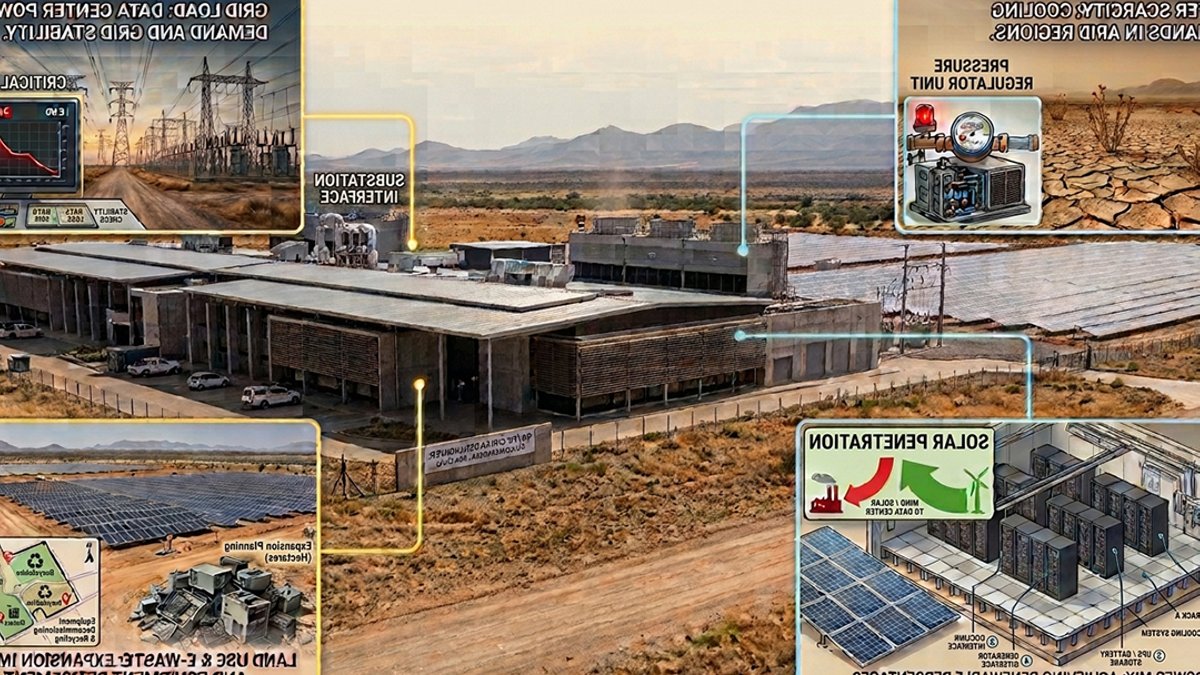
South Africa’s major data centre operators are pushing back against concerns their rapid expansion is placing unsustainable pressure on the country’s limited electricity and water resources. The sector faces scrutiny from the South African Human Rights Commission over the impact of its rapid expansion.
The commission is investigating the human rights implications of the country’s growing data centre and digital infrastructure footprint. This includes concerns around electricity demand, water consumption, environmental impact, land use, public participation and the adequacy of existing regulatory frameworks.
Over the last few years, South Africa has become a magnet for data centre investment, with international and regional operators including Equinix, Vantage Data Centres, NTT Data, Africa Data Centres (ADC) and Open Access Data Centres expanding their local footprints as cloud and AI demand accelerates.
Equinix says it has science-based climate targets and achieved 100% clean and renewable energy coverage in South Africa. The company’s local facilities benefit from the sector-wide closed-loop cooling performance that maintains an average water usage effectiveness of 0.1 L/kWh – roughly 95% below the global average.
Africa Data Centres (ADC) operates three primary data centres in South Africa and tells ITWeb that it lowers its grid impact by procuring clean electricity through a 20-year power purchase agreement for a 12MW solar farm that wheels renewable energy to its Cape Town and Johannesburg facilities.
As the data centre sector continues to grow, the resource question will become more significant, especially with the increasing demand for high-density computing infrastructure driven by AI.
Related: AI-Generated Bills Cause Problems in the Capitol
However, environmental advocates and critics argue that because South Africa’s grid relies primarily on Eskom’s coal-fired fleet, any additional demand from data centres carries a much higher carbon footprint than in regions with clean energy grids.
The growth of data centres in South Africa can be seen as a microcosm of the global trend towards increased digitalization and the subsequent strain on resources. The measures being taken by data centre operators to reduce their environmental impact are important in mitigating the effects of this growth, such as investing in renewable energy solutions to minimize their carbon footprint.
The SAHRC’s investigation into the human rights implications of the data centre sector’s expansion is a significant step towards ensuring that the growth of this industry is balanced with the need to protect the environment and the rights of local communities.
It’s essential for data centre operators to prioritize responsible growth and resource management. This includes investing in renewable energy, reducing water consumption, and implementing efficient cooling systems.
By taking a proactive approach to sustainability, data centre operators can help mitigate the environmental impact of their operations and ensure that their growth is aligned with the needs of the local community and the environment.
Data centre operators must adapt to changing environmental conditions.