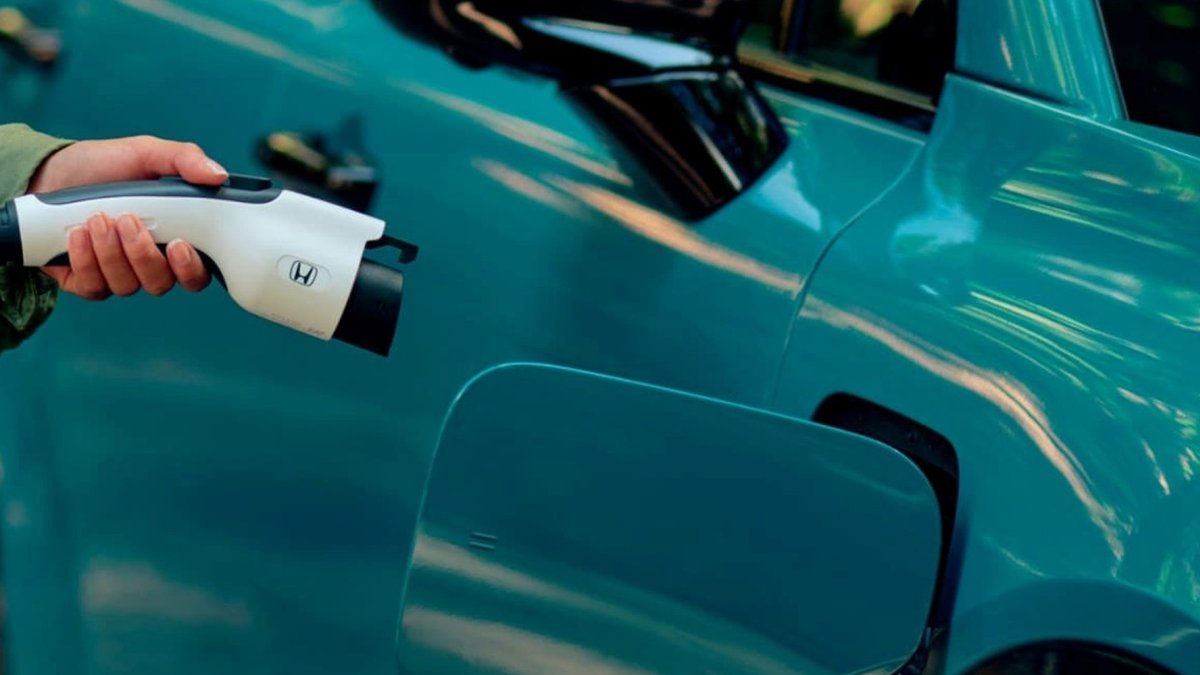
Honda has taken a significant step towards producing its highly anticipated solid-state battery system, striking a new partnership with American battery development firm QuantumScape. The announcement came just a few months after Honda shuttered the North American launch of three EV models, sparking the company’s first annual financial loss in nearly three quarters of a century.
The new partnership, announced in June 2026, will focus on researching and developing solid-state batteries and their associated manufacturing techniques. Honda will likely look to build off of QuantumScape‘s experience in developing next-gen solid-state lithium-metal batteries to find solutions that promise greater range, faster charging speeds, lower costs, and heightened safety.
Honda’s EV Strategy
In a press release announcing the partnership, Chief Operating Officer at Honda R&D’s Research Center of Excellence Atsushi Ogawa stated that QuantumScape‘s solid-state technology platform “demonstrated compelling and unique advantages” during a technical study. Ogawa forecasted that the partnership could “add value across a range of applications.”
Beyond potentially serving as the future of electric vehicles, QuantumScape frames its solid-state batteries as a solution to several energy-needy emerging technology markets, including data centers, drones, and robotics. Honda, for its part, appears to be going all-in on the technology as it looks to reach carbon neutrality by 2050.
Related: Xbox Games Stream Directly to Hisense TVs
The Tech Behind Solid-State Batteries
A battery uses electrolytes to carry positively charged electrons between its positive and negative terminals, known as the cathode and anode, respectively. In lithium-ion batteries used by most electric vehicles, this separator between the anode and cathode is formed of liquid electrolytes, typically a liquid solution of lithium salts dissolved in organic solvents.
In contrast, solid-state batteries replace these liquids with solid electrolytes, such as oxides, sulfides, polymer salts, or gel polymers. This also allows designers to replace lithium-ion batteries’ anodes, which are typically made of carbon or silicon, with more energy-dense alternatives like lithium metal.
QuantumScape touts its batteries as “anode-free,” in that the anode “forms in situ on the first charge.” These changes may seem trivial, but they represent a major leap in battery technology, as solid electrolytes offer several advantages over their liquid counterparts.
Benefits of Solid-State Batteries
Solid electrolytes have the potential for higher energy densities, meaning solid-state battery EVs could reach much longer ranges with smaller, lighter battery systems. According to QuantumScape, an EV could increase its range from 350 to somewhere between 400 and 500 using one of its battery cells.
Another major benefit would be shorter recharge times due to its materials sporting higher conductivity rates. Honda has estimated that a solid-state battery could potentially reach 80 to 90 percent of its charge in a matter of minutes.
Related: Meta updates Muse Spark and Facebook
Solid electrolytes also provide several safety benefits, eliminating the possibility of leakage and reducing the risk of deterioration from additional chemical reactions. Solid-state batteries can also operate at extreme temperatures, further extending their operating range and ensuring a more stable battery system.
They are not alone in this pursuit, as several manufacturers, including Volkswagen, have also invested in solid-state battery technology, indicating a potential shift in the industry towards this type of battery.
Competition in the Solid-State Market
Honda is likely to face stiff competition, as several global brands race to bring the technology to market. Chinese manufacturer CALB, for instance, began mass production of semi-solid-state batteries last year, culminating in a battery for light commercial vehicles.
Stellantis and Mercedes-Benz have both partnered with startup Factorial to test a fleet of semi-solid-state-powered vehicles. Meanwhile, Chinese EV giants BYD and CATL have announced plans to initiate small-scale production of solid-state EV batteries next year.
Related: Earth’s spacetime twist measured with high accuracy
Honda’s Japanese compatriots are also at the forefront of the solid-state race. Nissan recently joined a development initiative with British sulfur battery development conglomerate Gelion, while Toyota signed a partnership with Sumitomo Metal Mining to produce cathodes for their all-solid-state batteries.
Western companies are also getting into the mix, with BMW testing solid-state batteries in its i7 prototype and Volkswagen investing in Chinese battery developer Gotion High Tech.
It is unlikely that solid-state batteries will beat out their lithium-ion counterparts in the short term.
However, with several manufacturers believing they are on the verge of a breakthrough, the technology could become a pillar of the EV market sooner than expected.

