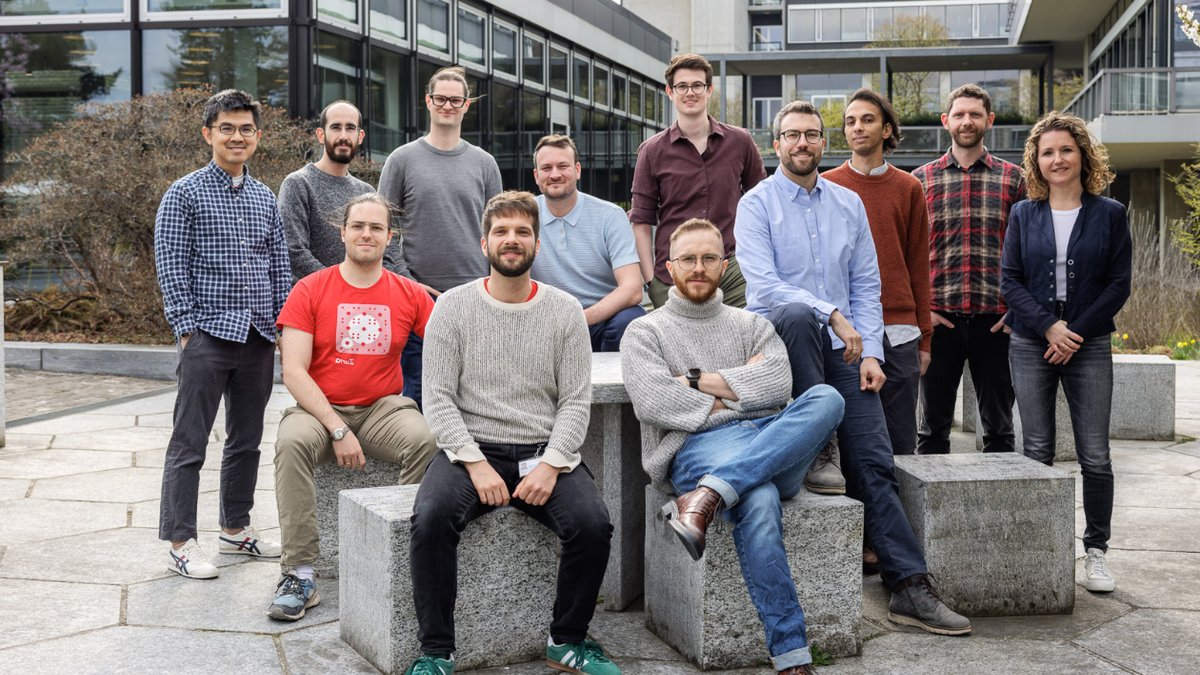
Swiss quantum computing startup ZuriQ AG secured $25.5 million in seed funding to expand its two-dimensional trapped-ion processor, a design intended to address persistent challenges in quantum computing.
The investment round was led by Quantonation, with contributions from Forward.one, Extantia, Firgun Ventures, and all previous backers. This follows an earlier $4.2 million pre-seed round after the company separated from ETH Zürich last year.
The main obstacle in quantum computing is qubit stability. These basic units of quantum information are extremely vulnerable to environmental noise. Even small vibrations or temperature changes can disrupt their state, causing errors that compromise calculations.
Related: Nvidia grants access to superintelligence project
Trapped-ion systems have been suggested as a way to improve stability, but scaling them has proven difficult. Most current designs use one-dimensional chains of ions, which need complex connections to form larger grids. This method restricts growth to one qubit at a time, making it hard to reach the thousands of qubits required for practical use.
Pavel Hrmo, ZuriQ’s co-founder and CEO, stated that the industry’s dependence on outdated architectures has slowed progress. “The trapped-ion companies that started the race began with one-dimensional designs that were useful stepping-stones, but the real challenge is whether they can successfully pivot to two dimensions as they attempt to scale,” he said. “We spent longer in the lab, and that time allowed us to identify an alternative route that is inherently easier to scale.”
ZuriQ’s method avoids the oscillating fields used in traditional trapped-ion systems. Instead, it uses Penning micro-traps with a static magnetic field, allowing ions to move freely in two dimensions without complex connections. This design enables qubit expansion across an entire chip surface, rather than being limited to linear growth.
Jonathan Home, a professor at ETH Zürich and scientific adviser to the startup, explained the advantage. “Hold ions in a line and the count grows one at a time; hold them in two dimensions, and it grows with the area of the chip — on a standard chip, that is the difference between tens of ions and many thousands,” he said. “Just as important, the ions can be moved freely in three dimensions, so they can be connected together far more flexibly, and that connectivity is what ultimately makes a quantum computer more capable.”
Related: Meta updates Muse Spark and Facebook
The company has already built a working prototype: a three-by-three array of nine individually controlled ions, made with Infineon AG using standard chipmaking techniques. The next phase involves scaling to hundreds, then thousands, of qubits.
With the new funding, ZuriQ will grow its research, increase chip production, and hire experts from other quantum computing firms. The aim is to prove the design works at scale.
Their approach relies on a two-dimensional foundation to outpace rivals constrained by one-dimensional designs. If successful, this could change what quantum computing can achieve.


