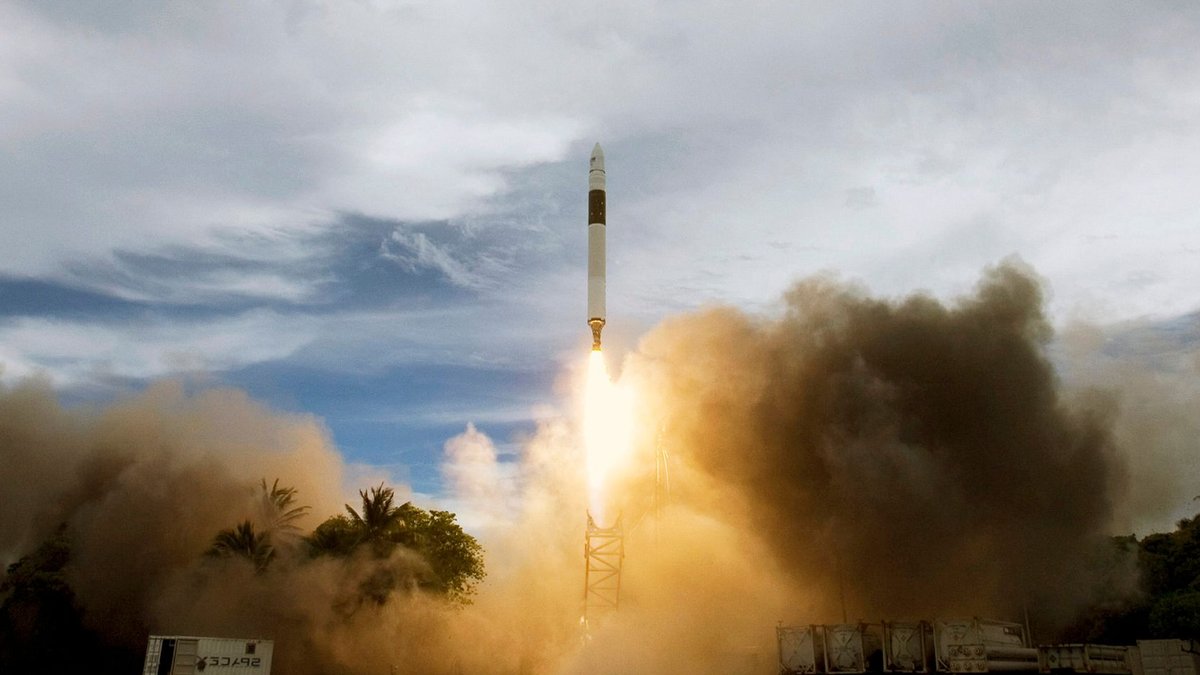
India’s first fully commercial satellite launcher, the Skyroot Vikram-1, reached a 280‑mile orbit on Saturday, marking the inaugural private orbital flight from the country’s primary spaceport on Sriharikota Island.
Launch details and performance
The rocket lifted off at 1:35 am EDT (06:35 UTC) after a half‑hour delay to address a last‑minute technical issue. Three solid‑fuel boosters fired in sequence, followed by a liquid‑fuel fourth stage that accelerated the vehicle to roughly 17,000 mph. Onboard cameras captured each phase, and U.S. military tracking confirmed the payload’s insertion into a 450‑kilometer orbit with a 60‑degree inclination, matching pre‑flight predictions.
Vikram-1 stands about 72 feet (22 meters) tall and can carry up to 770 pounds (350 kilograms) to low‑Earth orbit. Its size is modest compared to India’s larger launchers, yet larger than Rocket Lab’s Electron, another dedicated small‑satellite vehicle.
Related: Google-Backed FireSat Satellite Launched to Monitor Wildfires
A brief anomaly occurred when the third stage lingered near the fourth stage during separation, but the 3D‑printed engine on the upper stage still performed as intended, delivering the intended orbit.
Government support and industry context
The launch used one of ISRO’s two active pads, highlighting the cooperation between the public sector and emerging private firms.
IN‑SPACe chairman Pawan Goenka noted that the mission’s original goal was simply to clear the launch tower, yet the rocket achieved the same orbit and deployed several satellites, exceeding expectations.
Related: Anthropic AI models roll out worldwide after safety review
Skyroot’s co‑founder and CEO Pawan Kumar Chandana described the success as “one of the biggest milestones ever in India’s space sector,” adding that the launch felt “like a dream.”
While the first private orbital attempts historically face setbacks—SpaceX’s Falcon 1 needed four tries, Rocket Lab’s Electron required a second launch—Skyroot’s approach focused on rapid development and cost efficiency, opting for a solid‑fuel first stage to shorten the timeline.
The company’s next steps will hinge on securing additional funding and scaling production. If Skyroot can maintain a reliable launch cadence, it may attract international customers seeking responsive small‑satellite services, a niche that could grow as constellations expand.


